
Did you know that studies show up to 75% of children arrive at school already dehydrated? As parents, we worry about nutrition, sleep schedules, and screen time, but we often overlook one of the most fundamental aspects of our children’s health: proper hydration. The consequences of chronic mild dehydration in children extend far beyond feeling thirsty – affecting everything from academic performance to mood regulation to physical development.
The Dehydration Epidemic in Schools
Walk into any elementary school cafeteria and you’ll see the problem immediately. Kids clutching juice boxes, chocolate milk, and sports drinks while their water bottles sit forgotten in backpacks. When children do reach for water, it’s often from a questionable fountain that dispenses lukewarm liquid that tastes like metal pipes.
The reality is that most children simply don’t drink enough water throughout their day. They get distracted, they don’t like the taste of their school’s water, their water bottles are too complicated to operate during busy class transitions, or – most commonly – their drinks have gotten warm and unappealing by lunchtime.
This isn’t just a comfort issue. Proper hydration is crucial for children’s developing bodies and minds, yet we’ve somehow normalized kids going through entire school days on minimal water intake.
Why Hydration Matters More for Kids
Children’s bodies are composed of about 75% water, compared to 60% in adults. They have a higher surface area to body weight ratio, meaning they lose water more quickly through their skin. Their kidneys are still developing the ability to concentrate urine efficiently. Most importantly, children often don’t recognize thirst cues the way adults do, and they’re easily distracted from drinking when engaged in play or learning.
When kids don’t drink enough water, the effects are immediate and measurable. Research shows that even mild dehydration – as little as 2% body water loss – can significantly impact a child’s ability to concentrate, process information, and regulate emotions. Teachers often report that children are more irritable, have difficulty focusing, and experience more headaches during warm weather or after physical activity.
For active children involved in sports or outdoor play, the stakes are even higher. Dehydration affects physical performance, increases injury risk, and can lead to dangerous overheating. Yet many young athletes rely on sports drinks that are loaded with sugar and artificial ingredients, when what their bodies actually need is consistent access to clean, cold water.
The Water Bottle Challenge
As parents, we know our kids need to drink more water. We send them to school with water bottles, remind them to drink during sports, and encourage hydration at home. But here’s where good intentions often fail: most water bottles aren’t designed with children’s actual needs in mind.
Kids need bottles that are genuinely leak-proof (because soggy backpacks discourage use), easy to operate with small hands during brief class breaks, and capable of keeping water cold and appealing throughout long days. Most importantly, the drinking experience needs to be effortless and satisfying, not a frustrating struggle with complicated mechanisms.
This is where the design of the water bottle becomes crucial to hydration success. A bottle that’s difficult to use, that leaks, or that makes water taste unpleasant will sit unused no matter how many times we remind kids to drink.
The Temperature Factor
One of the most overlooked aspects of children’s hydration is temperature preference. Kids are much more likely to drink water that tastes good and feels refreshing. Lukewarm water from a non-insulated bottle is about as appealing to a child as it sounds – which is to say, not at all.
The Owala Kids FreeSip addresses this with double-wall insulation that keeps drinks cold for up to 24 hours. This isn’t just a nice feature – it’s a game-changer for encouraging consistent water intake. When kids know their water will be refreshingly cold even after sitting in a hot car or sunny classroom, they’re far more likely to reach for it throughout the day.
The wide opening also allows parents to add ice easily, creating an even more appealing drinking experience that kids actually look forward to rather than viewing as a chore.
Making Water Fun and Accessible
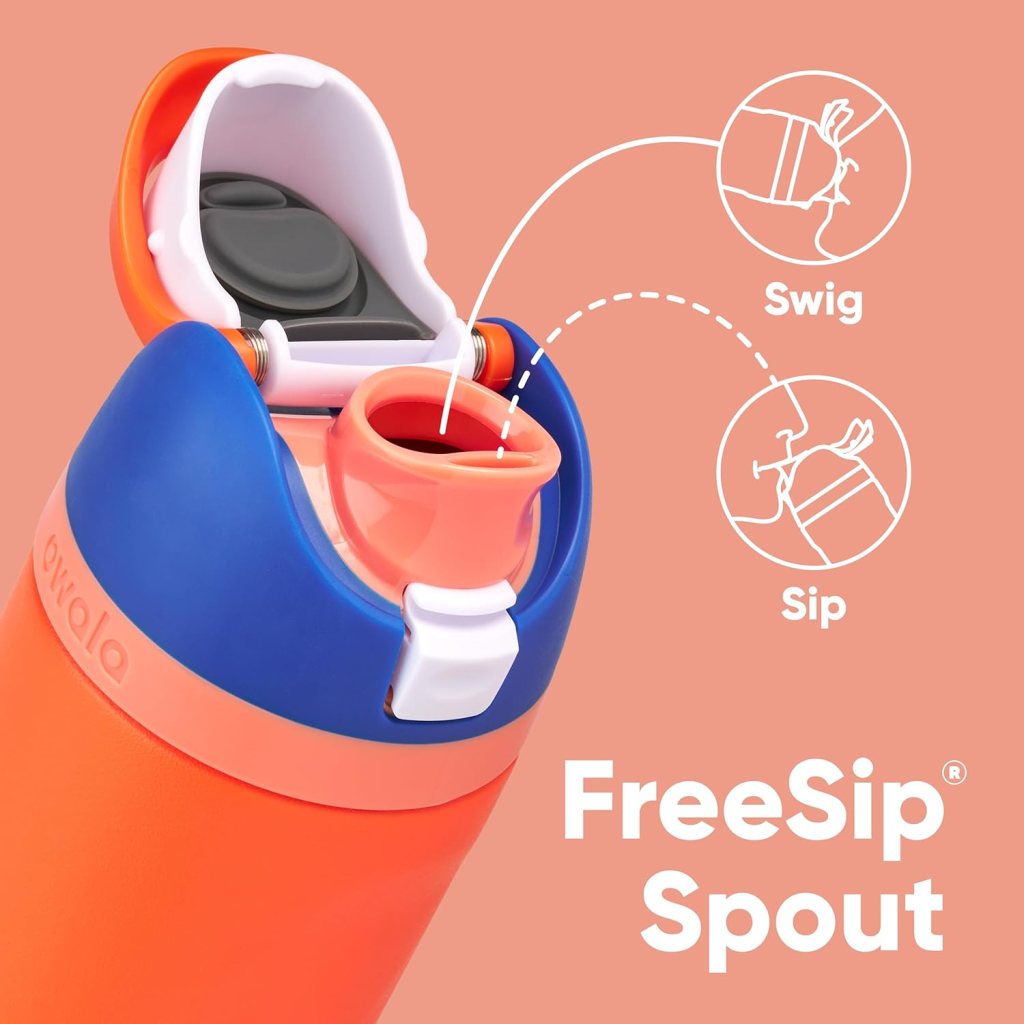
The patented FreeSip spout design represents a breakthrough in making hydration accessible for children of different ages and in different situations. Young kids who are still developing motor skills can sip easily through the built-in straw without tilting their head back uncomfortably. Older kids and active children can tilt the bottle back for quick, efficient hydration during sports or play.
This dual functionality means one bottle works for classroom sipping, lunch table drinking, playground guzzling, and sports field hydration. Kids don’t have to adapt their drinking style to their bottle – the bottle adapts to their needs.
The push-button lid with lock eliminates the complexity that makes many kids avoid using their water bottles. No screwing and unscrewing caps with wet or small hands. No complicated mechanisms that require two hands to operate. Just a simple push of a button, and they’re drinking.
The Health Benefits of Proper Hydration
When children stay properly hydrated, the benefits are remarkable. Teachers report better attention spans, fewer complaints of fatigue or headaches, and improved classroom behavior. Parents notice better moods, more consistent energy levels, and fewer afternoon crashes.
For children involved in sports or physical activities, proper hydration supports optimal performance, faster recovery, and reduced risk of heat-related illness. The immune system functions better when the body is well-hydrated, potentially meaning fewer sick days and missed activities.
Even skin health improves with proper hydration – important for children dealing with acne or dry skin conditions. The body’s natural detoxification processes work more efficiently when water intake is adequate.
Creating Sustainable Hydration Habits
The goal isn’t just getting kids to drink more water today – it’s establishing lifelong healthy hydration habits. This requires making water drinking as convenient and appealing as possible during the formative years when habits are being established.
A reliable, well-designed water bottle becomes part of this habit formation. When kids have positive associations with drinking water – it tastes good, it’s easy to access, it keeps them feeling energetic – they’re more likely to choose water over sugary alternatives as they grow older.
The 16-ounce capacity of the Owala Kids FreeSip is perfect for building these habits. It’s enough water to make a significant impact on daily hydration without being so large that it becomes burdensome for children to carry and use regularly.
The Safety and Quality Factor
In our effort to encourage more water drinking, we can’t overlook the quality and safety of what our children are drinking from. The BPA, lead, and phthalate-free construction of the Owala bottle ensures that as kids increase their water intake, they’re not inadvertently exposing themselves to harmful chemicals.
The stainless steel construction eliminates the plastic taste that can make water less appealing and ensures that the bottle won’t degrade or develop odors over time. This durability means the bottle continues to provide a positive drinking experience throughout years of use.
Making the Investment in Health
When we consider the long-term health implications of chronic mild dehydration – from academic performance to physical development to habit formation – investing in a quality water bottle that actually encourages drinking makes perfect sense.
The Owala Kids FreeSip isn’t just a water bottle – it’s a tool for establishing healthy hydration habits that will benefit children throughout their lives. When you compare the cost of one well-designed bottle to the ongoing expense of replacing broken bottles, dealing with the consequences of poor hydration, or trying to correct bad habits later, the value becomes clear.
For Parents Ready to Prioritize Hydration
If you’re concerned about your child’s water intake, if you’ve noticed afternoon energy crashes or difficulty concentrating, if you’re tired of battles over drinking water, the solution might be simpler than you think. Sometimes it’s not about motivating kids to drink more – it’s about removing the barriers that make drinking water inconvenient or unappealing.
The right water bottle makes hydration effortless, enjoyable, and automatic. When kids have easy access to cold, clean water that they can drink quickly and easily, proper hydration becomes natural rather than a constant parental reminder.
Your child’s health, academic performance, and long-term habits are worth investing in. The hidden health crisis of childhood dehydration has a surprisingly straightforward solution – we just need to make drinking water as easy and appealing as it should be.
Ready to transform your child’s hydration habits? The Owala Kids FreeSip Insulated Stainless Steel Water Bottle with Straw for Sports, Travel, and School BPA-Free Sports Water Bottle, 16 oz, Blue Citrus makes proper hydration effortless, appealing, and automatic for kids of all ages.
Disclosure: This post contains affiliate links. If you purchase through these links, I may earn a small commission at no additional cost to you. This helps support the content I create while allowing me to recommend products I genuinely believe in.

Leave a comment